
Stripes
24.08.2026
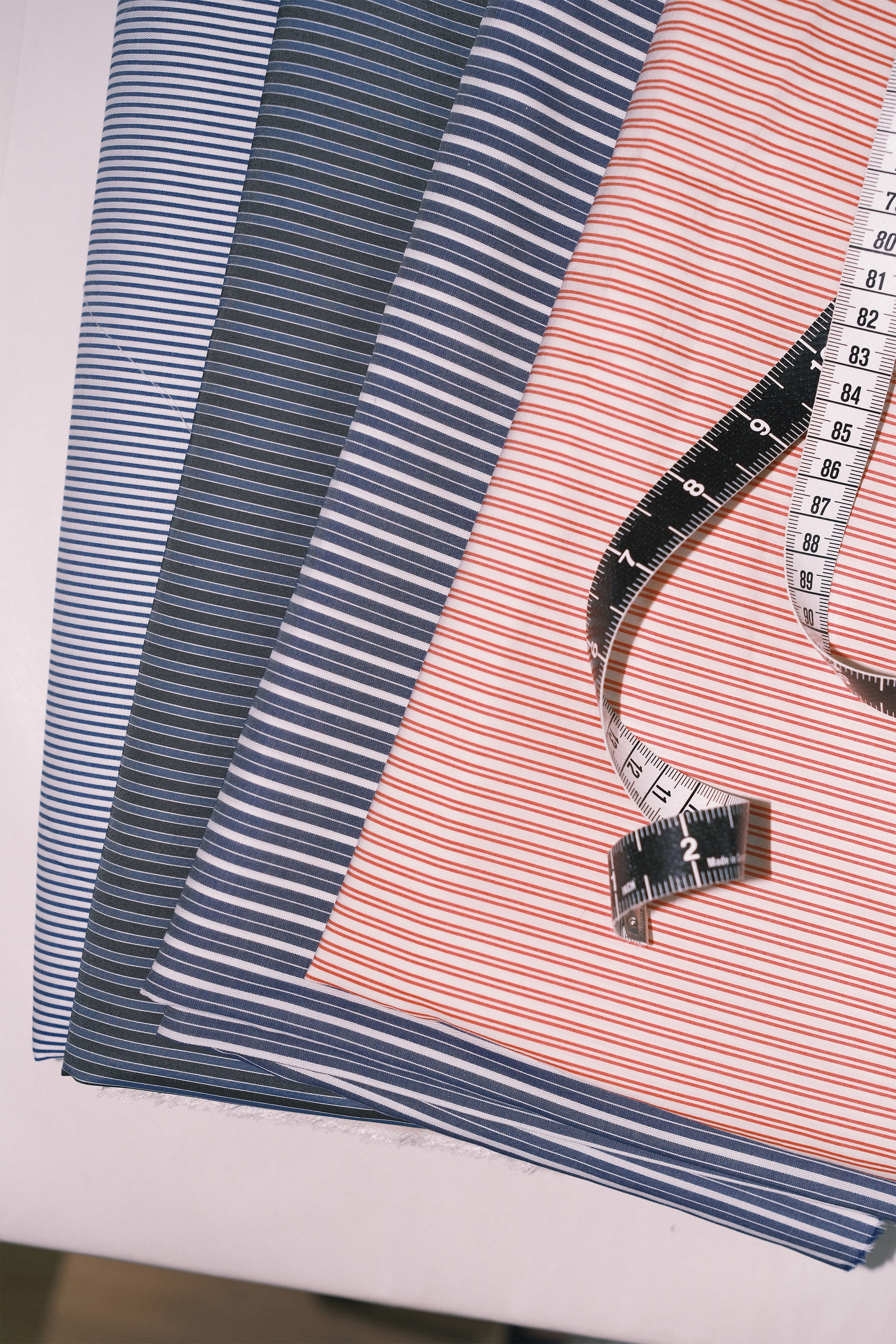
Stripes are a simple form of order. Lines run parallel to one another, keeping the same distance and extending in both directions as if they could go on forever. There is no centre, no real beginning or end.
Yet stripes are rarely boring. Changes in width, spacing, colour, light and dark can completely change the way they feel. Fine stripes can be quiet and delicate, while wider stripes feel more direct and bold. Similar colours make them softer and more subtle; stronger contrasts make them clear and graphic.
Perhaps this is why stripes can appear on a banker’s shirt or a naval uniform, but also at the circus, on an awning or a beach chair. The same parallel lines, with small changes in width, spacing and colour, can have completely different characters.
Blue
07.08.2026
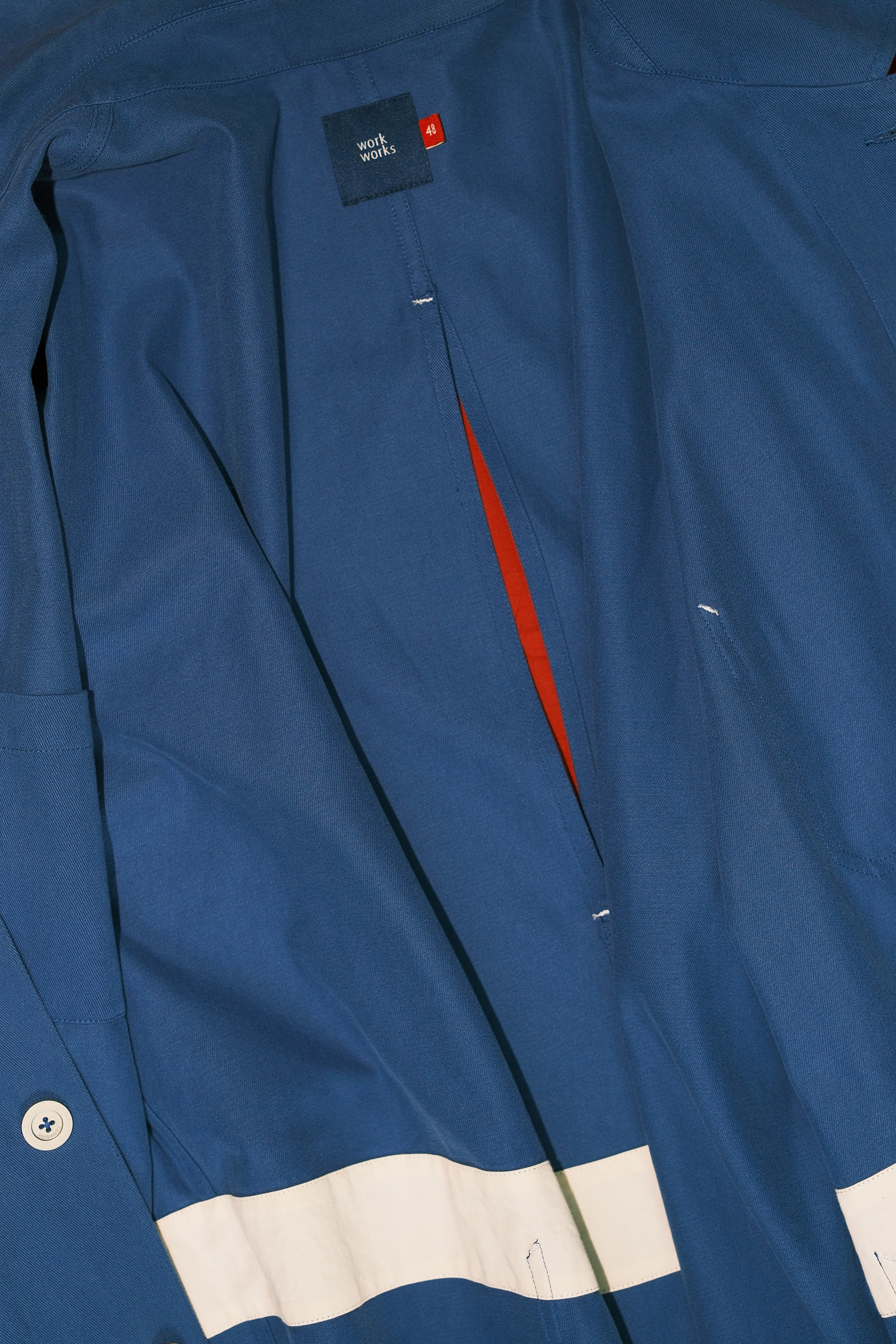
In Theory of Colours, Goethe described blue as "a colour that continually recedes." More than a century later, optics offered an explanation. Distant mountains appear blue because the atmosphere scatters blue light before it reaches our eyes. Blue has long belonged to the sky, the sea and faraway landscapes. Perhaps that is why it so often feels quiet, spacious and just out of reach.
Slub
01.08.2026
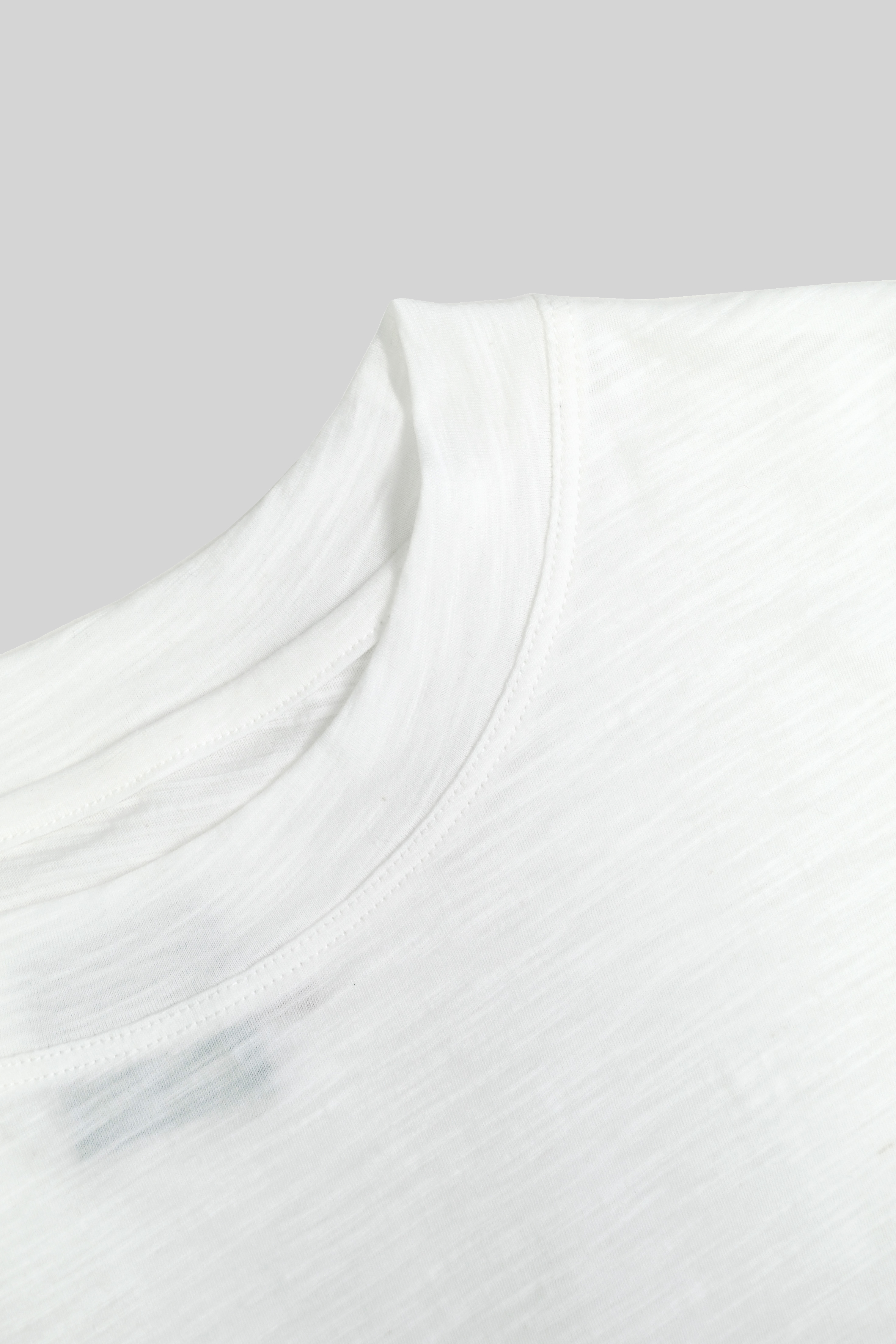
Modern spinning has always been about making things more consistent. Fibres became more even, yarns more regular, and fabrics smoother. With each technical improvement, variation gradually disappeared. Consistency made production faster and quality easier to control.
Slub isn't a return to older methods. Instead, it uses the same precision to bring variation back into the yarn. The yarn is intentionally thickened at carefully controlled intervals before returning to its original thickness. What was once considered an imperfection becomes part of the fabric itself.
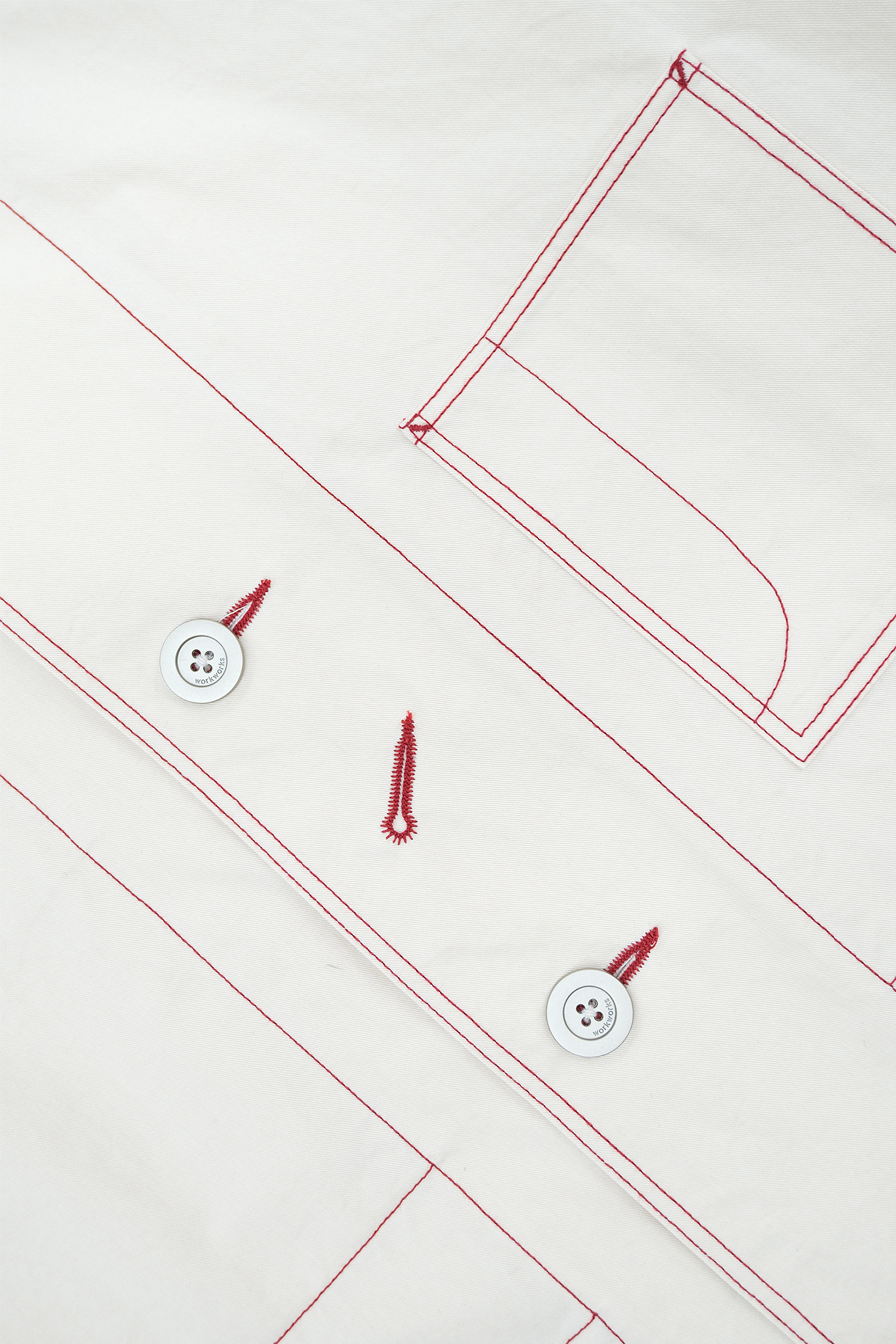
Double Stitches
26.07.2026
Like railway tracks, double stitches repeat, run in parallel, and carry weight. At certain points, they diverge and converge, forming a network of lines that connects different parts of a garment.

Rivets
12.07.2026
There are many parts of a garment that we rarely notice on their own. Seams, zippers, rivets. They belong to the structure of the garment rather than its decoration. They are not patterns or ornaments. They simply do their job.
The original purpose of the rivet was equally straightforward. In the nineteenth century, Levi Strauss and tailor Jacob Davis began reinforcing the pockets and other high-stress areas of jeans with copper rivets, allowing the garment to withstand greater strain and last longer. Since then, rivets have remained a means of connection and reinforcement, rarely becoming the focus themselves.
Over time, however, rivets became increasingly visible. They appeared on shoulders, cuffs, leather jackets and boots, gradually developing into a visual language of their own. In some contexts, they grew larger, brighter and sharper, coming to represent strength, rebellion and identity.
While designing this T-shirt, I found myself wondering whether a rivet could exist in another way. I didn't want to hide it, nor did I want to emphasise it. Instead, I tried to think of it simply as a material, no different from cotton, stitching or a button. It has weight. It feels cool to the touch. It catches the light gently. It remains unmistakably metal, yet through its arrangement, it begins to form a different kind of order. What interests me is not the material itself, but how a change in the relationship between materials can create something new.
The Pleiades, or Seven Sisters, is one of the closest open star clusters to Earth. Its stars have travelled together for more than one hundred million years, moving through space in the same direction.
The rivets are placed according to the actual positions of the stars. From a distance, they appear as nothing more than small points of reflected light. You may recognise the constellation, or you may not. Knowing what it represents does not change what it is, and not knowing is equally fine. They remain, first and foremost, a handful of rivets—simple objects without any fixed meaning. Before becoming an image, they are first a material.
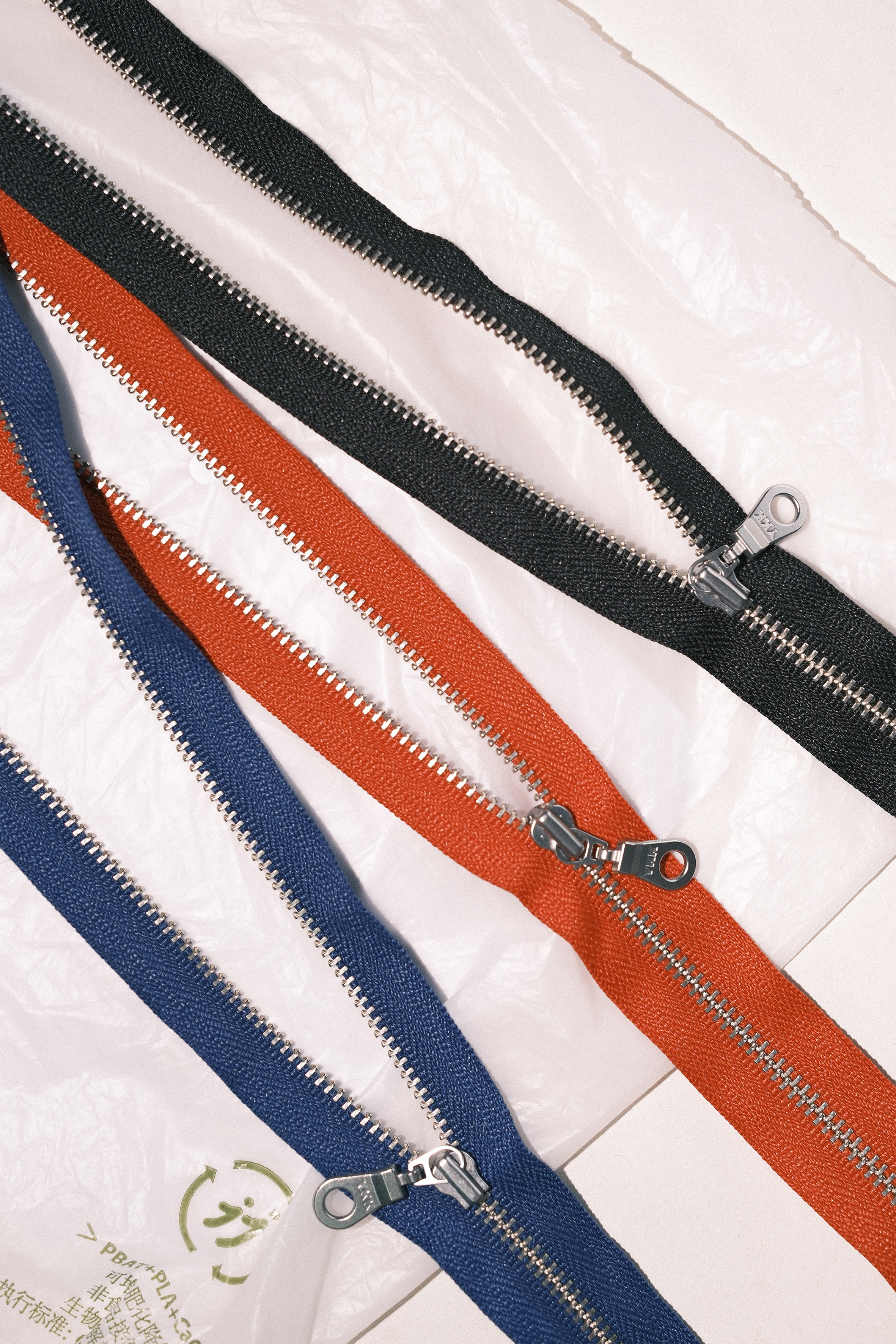
Zipper
27.06.2026
A zipper relies not on force, but on precise interlocking.
Every tooth has a fixed pitch, angle, and position. Only when they align perfectly can force be transferred and the system function as intended.
It reminds me of gears, mechanical watches, and finely crafted wooden joinery. What makes them work is not strength, but precision.
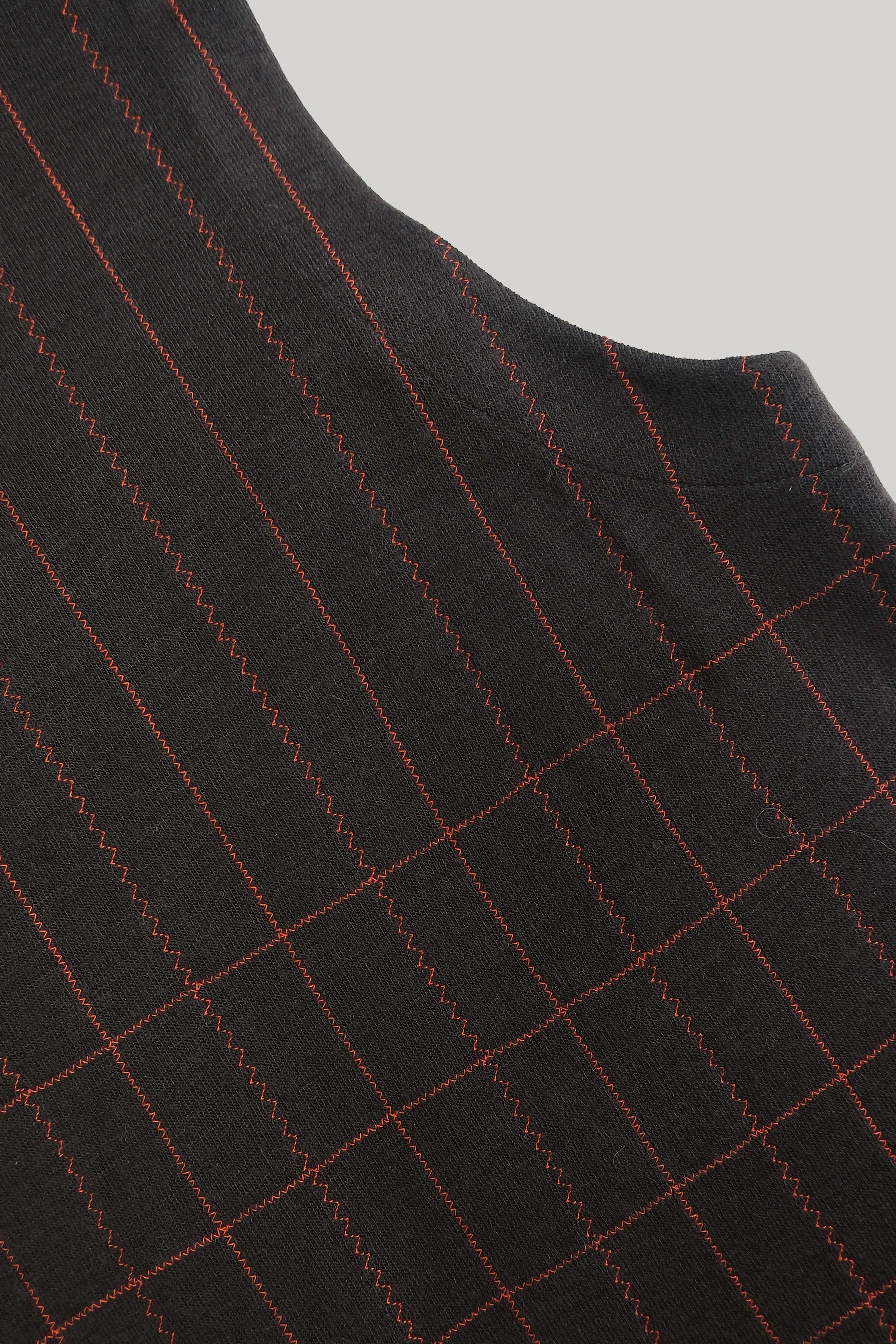
Zigzag
28.05.2026
The zigzag is one of the earliest abstract patterns created by humans. Similar lines can already be found on Neolithic pottery. Over time, they appeared on textiles, architecture and everyday objects. Across different cultures, the zigzag has been used to represent water, lightning, mountain ridges and the movement of snakes. A simple line, repeated across cultures for thousands of years.
In Chinese, the zigzag takes its name from the character 之 (zhī), whose shape follows the same changing path. In English, zigzag is an onomatopoeic word, echoing both the movement and the shape of the line. Neither language explains what a zigzag is. Both simply describe what it looks like.
The zigzag is built on repetition. A heartbeat rises and falls. A loom moves back and forth. A sewing machine stitches in the same rhythm. Repetition is one of the ways we recognise patterns. Perhaps that is why there is something quietly reassuring about it.

